Appeared originally on HBR.org
What makes a person good at – and comfortable with — persuading others?
Yesterday, I had lunch with a friend, a brilliant and hard-working VP. I had just finished Dan Pink’s excellent new book, To Sell Is Human, and was eager for my friend’s take on it. In a nutshell, Pink argues that moving people (i.e., selling, but also persuading or influencing) has become an essential component of nearly everyone’s job in the modern workplace. Everyoneis in sales. Like a lot of people, I found Pink’s argument to be radical, surprising, and undeniably true.
But that doesn’t necessarily mean everyone likes this argument. I thought my friend would find it interesting, but instead he seemed profoundly uncomfortable. “That’s crap,” he said, more to himself than to me. “I’m not a salesman. My job is strategy, not manipulating suckers.”
On the surface, it seemed like the salesmen-are-slimy stereotype was at work here (something Pink’s book tackles head on and does an admirable job dispelling). There might also have been a touch of aversion to the idea of selling- many of us wonder if it’s right, ethically–speaking, to persuade someone to buy or believe something. We’re uneasy with the power that effective persuasion gives us. But, as Pink points out, it’s impossible for human beings to avoid influencing, and being influenced by, other people’s words and deeds. People are going to be moved – the trick is to make sure that the ideas and products with genuine merit do the moving.
In my friend’s visible discomfort, however, I sensed something more. Something like what happens when you give an unsuspecting person a set of algebra problems and they literally back away from you stuttering, “Um… I’m not a math person.” (Believe it or not, in my job I actually do things like that.)
I spend a lot of time writing and speaking about the pervasive – and false – belief that our success depends upon the possession of innate, immutable abilities. I drown my readers and listeners in data, showing beyond a reasonable doubt that reaching goals and mastering skills is about strategy, effort, and persistence, and that these things are learned. The abilities I have usually focused on are intelligence, creativity, self-control, and, of course, mathematical skill.
But until I read Pink’s latest book and witnessed my friend’s reaction to the idea that the ability to move people is essential to success, it really hadn’t occurred to me that a lot of people might think that’s innate too. Oh no.
To find out more, I turned to Google. I searched the internet for the expression “natural born salesman.” Over half a million hits. To be fair, many of these were attempts to dispel the myth of the naturally-gifted mover, but the need to dispel the myth speaks volumes about its ubiquity.
Selling, moving, persuading, influencing… many of us may resist the idea that this is part of our job description (or avoid taking positions for which it would be) because we believe we lack that ability, just as we avoided calculus in college like the plague because we weren’t “math people.” My friend doesn’t want to believe that sales is a part of his job because he doesn’t believe he is good at sales, and more importantly, because he doesn’t believe he can be.
(A quick aside: There is research suggesting that successful salespeople have particular personality traits, including conscientiousness, humility, and as Pink points out “ambiversion” – being neither an extreme introvert nor extrovert. But it’s important to not assume that personality traits = innate ability. Personalities can and do change as a result of our efforts and experiences. You aren’t “stuck” as you are.)
If you want to become good at influencing others, then you simply need to learn how. It’s not magic, and it’s certainly notinnate. It may sometimes feel innate, but that’s because people are often able to pick up on effective strategies implicitly – without conscious awareness – through experience and observation. Not realizing you are learning makes your abilities feel innate, even when they aren’t.
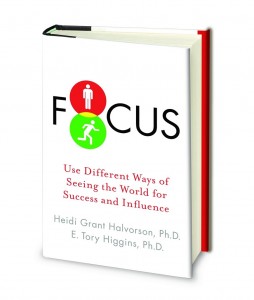
Do you want to be a people mover? Pick up one (or more) of the many excellent, data-driven books on the subject. To Sell Is Human is a good place to start. Robert Cialdini’s Influence and Dan Ariely’s Predictably Irrational are also filled with strategies of effective persuasion. (My forthcoming book with Tory Higgins, Focus, offers a few useful pointers as well.)
Then, armed with the knowledge of what works, practice. Everything gets easier, more automatic, more “natural” with practice. You don’t need to be afraid of this brave new people-moving world – you have what it takes, you just need to learn to use it.
Heidi, I love your work, but this article not only drove me to comment, it made me write an article of my own:
https://jackmalcolm.com/blog/2013/02/has-daniel-pink-gone-too-far/
I’m looking forward to your new book!
Incredibly encouraging. Loved the article. Thanks for the post!